Deep Space Optical Communication (DSOC)
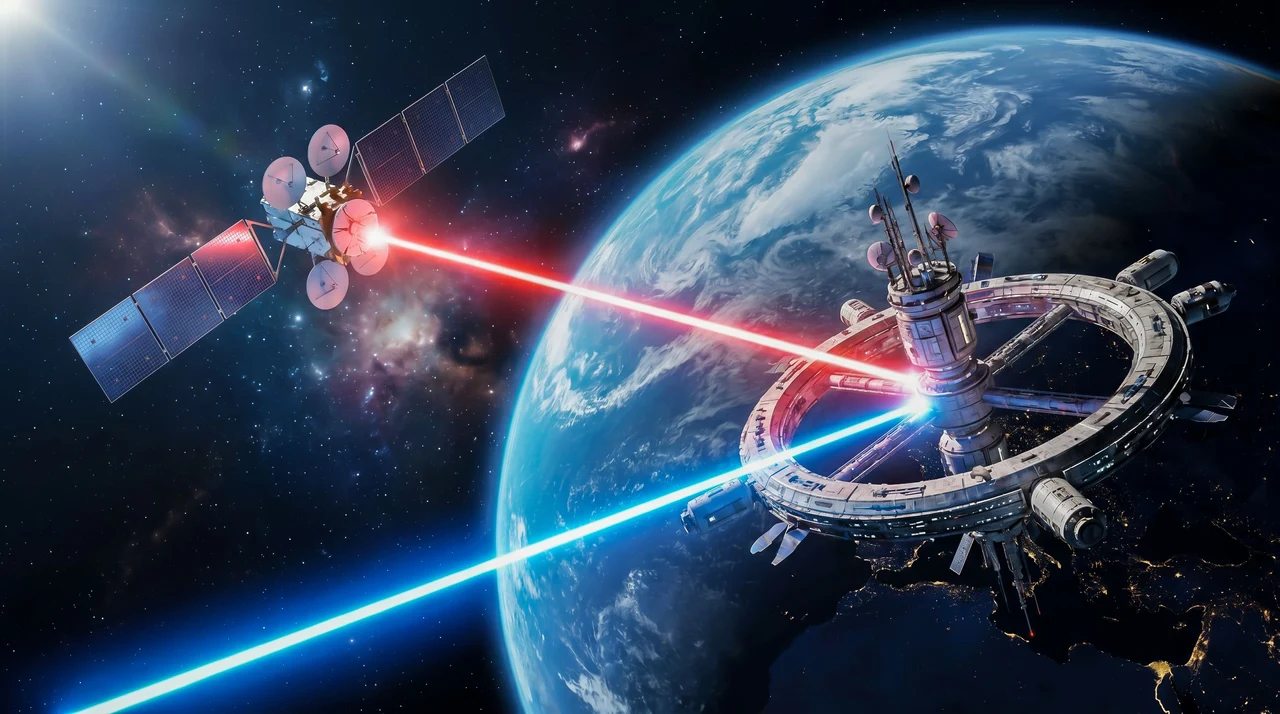
Optical communication technology in space offers a solid foundation for several ambitious future endeavors. Coherent beam combining systems from FiberBridge Photonics can enable multi-10kW high-power optical communication, in particular from ground to space.
Laser-based space communication is an essential building block for high-priority missions like the ESA’s pioneering MARCONI/LightShip mission, the cis-lunar Moonlight/LunaNet communication infrastructure, and the joint transatlantic effort of the NASA-ESA Mars Relay Network. This shift towards laser-based links is not merely an upgrade, it is a basic necessity for achieving the exponential data throughput required by humanity’s next generation of interplanetary and lunar exploration programs.
The recent NASA Psyche mission successfully demonstrated the potential of lasers to transfer significantly more data between distant spacecraft than is possible using the radio waves employed today. For example, optical communication was successfully established over large distances by incoherently combining seven laser beams with kW-level output power. These lasers were bright enough to allow deep space optical communication (DSOC) over a distance of 1.5–2.5 astronomical units (220–370 million km) from Earth – distances that would be typical for a future Mars mission, for example. Coherent beam combining enables further improvements in optical power scaling for ground-to-space communication while maintaining excellent beam quality.
High-power, directed laser beams based on ytterbium or erbium fiber lasers allow power levels of up to several tens of kW with minimum divergence angles. Coherent beam combining offers additional potential for beam steering and ultrafast wavefront corrections to mitigate atmospheric effects when based on ground stations.
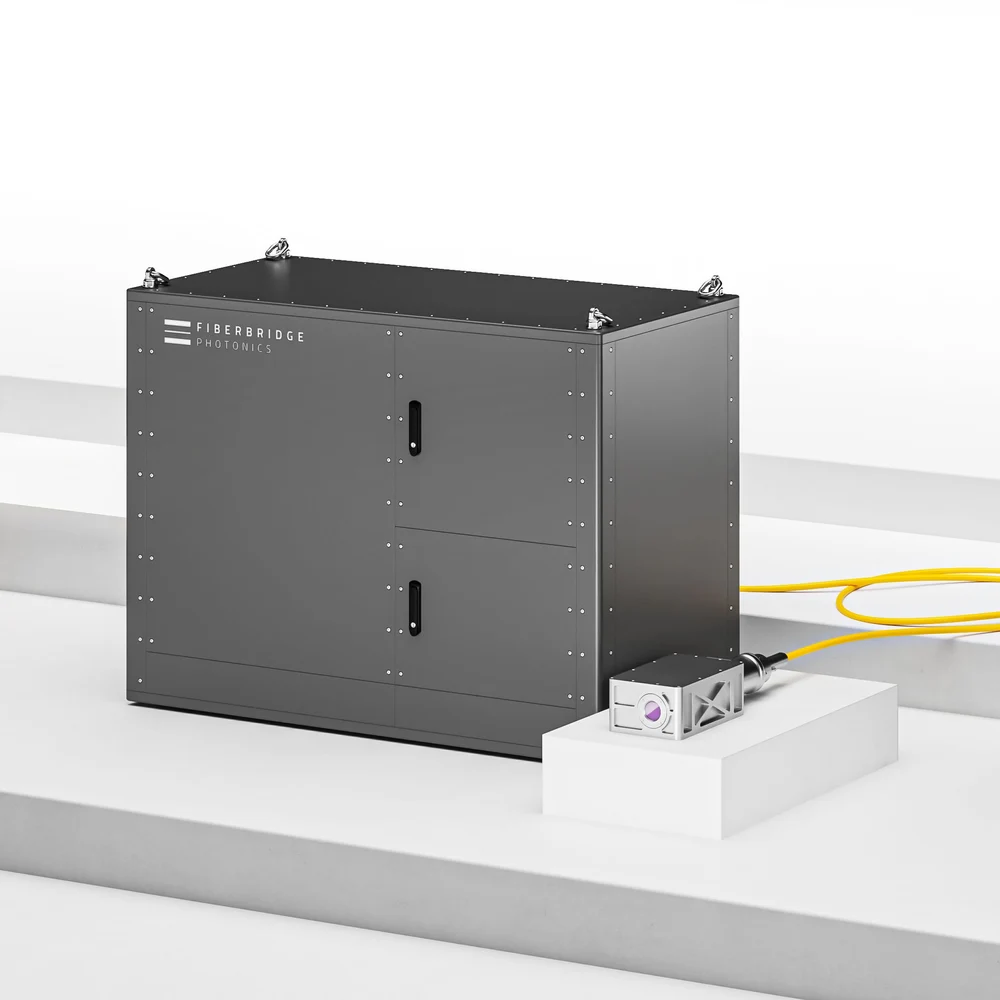
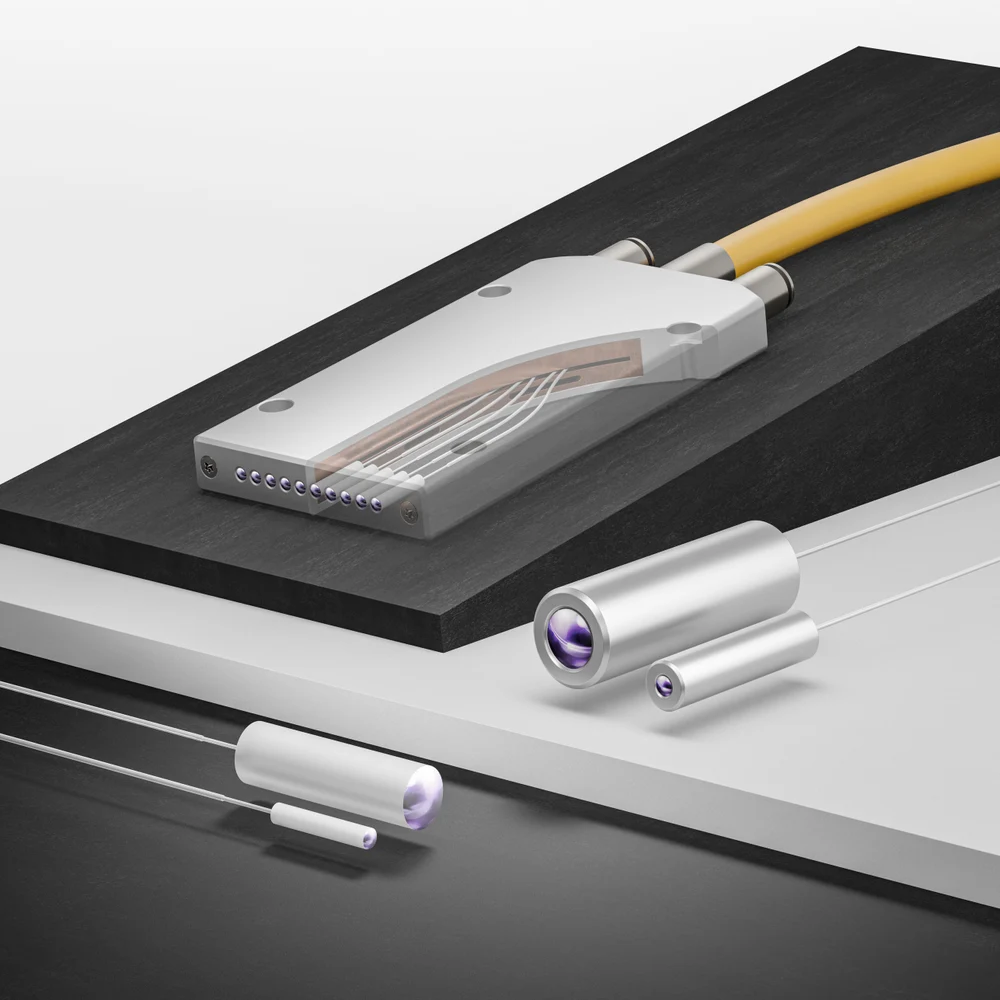
To date, up to 127 laser channels can be combined with our highly compact beam combiner unit, with the possibility of scaling the number to 169 or even 217 channels, for example. A higher number of channels and therefore higher overall laser power does not lead to a worse beam quality, which is typically in stark contrast to spectral beam combining. Scaling up the number of laser channels and thus the total optical power is actually advantageous! A higher number of laser channels increases the failure resilience of the system, enables more freedom and efficiency in, for example, atmospheric turbulence control or beam shaping, and ultimately also allows for more relaxed optical power requirements per fiber amplifier.
Related Products
Browse Through Related Products To Find Similar Or Complementary Products.